Hello Friends and Fans of Stanley Burke! Just a note to guide you to the most informative parts of this blog which are in 2007/8. Well worth checking out to find the essence of Stanley Burke's visionary thinking.
Tuesday, July 15, 2025


Saturday, July 9, 2016
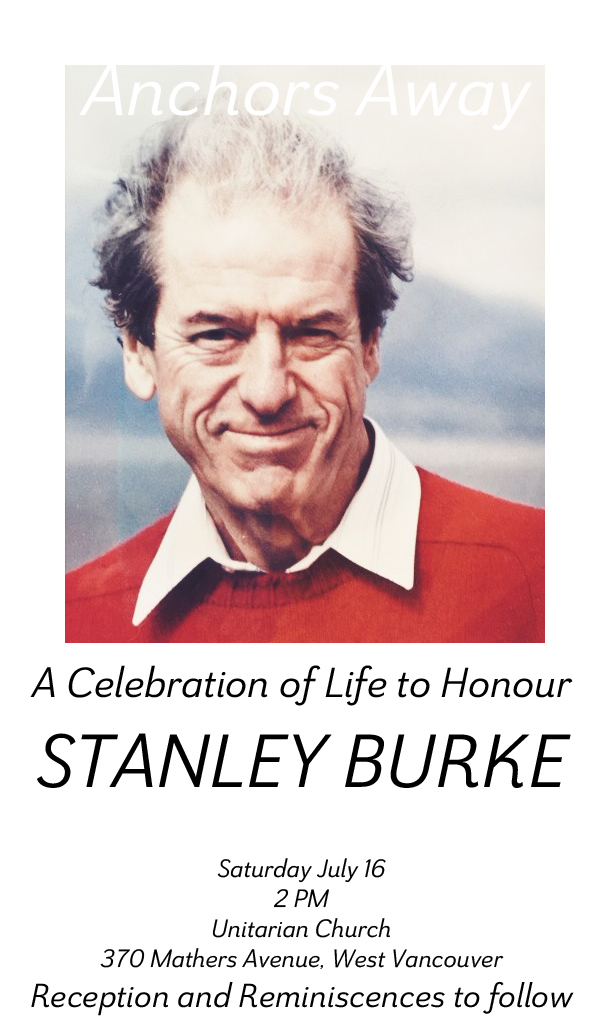
Anchors Away!
Stanley Burke
Patriarch and peacemaker, veteran CBC news anchor, journalist, foreign correspondent, author, humourist and peacekeeper, dad, husband, great friend. What a life! What an arc of life dad had! He was as colourful and dynamic as the comets he loved to paint as a young man. Dad had a beautiful mind and a beautiful heart and a sweetness that people responded to with love. He was easy to love. The world fell in love with him, his sparkling intellect and irrepressible humour.
We are having a celebration in his honour next Saturday. We wish Stanley well on his next voyage!
Saturday, June 4, 2016
Serendipity and Coping with the Unexpected
Here is an excerpt from a proposal that dad wrote in the 70s for a community he planned to build on his father's land on Cape Roger Curtis.
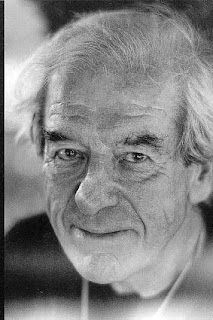
There has been a tremendous outpouring at the passing of my father, mentor and friend. In his later years living on Amherst Island with my stepmother, Peggy Coulter, he worked very hard on a book that was very close to his heart and in many ways lit his path at the end of his life. This book was unfinished.
The conventional planning process attempts to provide for all eventualities and thus the unexpected comes as a shock, almost an insult. At a time when shocks come with ever greater frequency, the result is dismay and evidence of dangerous fatigue.
We suggest that an answer lies in reversing the thought process so as to recognize the inevitability of unexpected events and secondly, to organize small, flexible, diversified social units which can more easily adapt.
It can be likened to preparing a ship for sea. If the vessel is sound and the crew ready, a storm can be supremely satisfying. For a crew 'programmed' for calm weather however, the result can be terror and disaster.
At the Institute of Resource Ecology, an important part of the research program concerns resilience - how many shocks can an organism sustain, often without visible effect, before it collapses? How can resilience be maintained, in human systems as well as in nature?
There has been a tremendous outpouring at the passing of my father, mentor and friend. In his later years living on Amherst Island with my stepmother, Peggy Coulter, he worked very hard on a book that was very close to his heart and in many ways lit his path at the end of his life. This book was unfinished.

Wednesday, November 11, 2015
Stanley Burke on Memorial Day 2015
Dad was sleeping when I called, so Rebecca, the new helping hand, described this morning's scene...
Da attended the Amherst Island Memorial Day event today, looking fantastic in his uniform. He was the only man there in uniform. With the help of several little children, Dad carried a wreath and laid it in place. I can just imagine. I thanked Rebecca for painting that picture in my mind. How I wish I could have been there. We live too far apart. Most of us are here in Vancouver, with only Dad and Peggie on Amherst. So it is. That's Dad with cousin Patrick Burke, the Dad with brother Brian Burke, and Peggie with me. Love those selfies. I couldn't find a shot of Dad in his uniform, though I know I've seen a good one, somewhere.
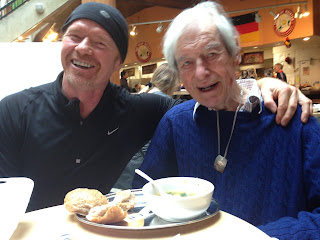
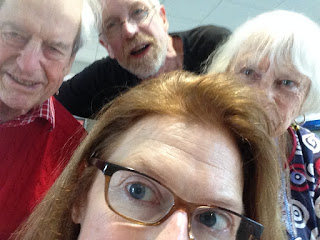
Da attended the Amherst Island Memorial Day event today, looking fantastic in his uniform. He was the only man there in uniform. With the help of several little children, Dad carried a wreath and laid it in place. I can just imagine. I thanked Rebecca for painting that picture in my mind. How I wish I could have been there. We live too far apart. Most of us are here in Vancouver, with only Dad and Peggie on Amherst. So it is. That's Dad with cousin Patrick Burke, the Dad with brother Brian Burke, and Peggie with me. Love those selfies. I couldn't find a shot of Dad in his uniform, though I know I've seen a good one, somewhere.


Monday, September 21, 2015
Sunday, June 21, 2015
Happy Fathers Day to a Wonderful Dad!
Yes. Thanks for the rich years of love, laughter and inspiration! Many people join with me here to thank you for your many valuable contributions to this world of ours; your light, your love and your prevailing good humour through many trials not the least. We love you. We cherish you and everything "Stanley Burke."


Summer’s First Morning Awakens
A play of words
A play of light
The longest day
The shortest night
Let the madness of the world fall away today
and you and I dance around the sun
Summer’s first morning awakens
like a precious child
a daisy ring
a four-leaf clover of hope
the full familiar fragrance
that I yearn for has arrived
We stand balanced for a moment
at our height our peak
in the sweet stillness of truth
beyond the pendulum of light and dark
H Burke June 21 2014/15
Sunday, February 8, 2015
Friends, Fans and Family of Stanley Burke! It's Stanley Day!
February 8th. Stanley Burke's birthday! He is 92 years young today. As I reached for the phone to call him on Amherst Island, I glanced out my window and was delighted by the sight of a rainbow hanging in the air, right off my balcony by Stanley Park. Clearly this is Da's birthday rainbow. I was excited to share it with him and he sounded ebullient on the phone, and loved my version of "Ode to Joy"played on the piano (mixed in with Charlie Brown.)
Miles of smiles...
Here's to a remarkable human. We are so lucky he's still with us. We can still laugh together, still share the experience of life together.
He and Peggie will soon travel around the horn on a cruise ship and up the coast of Brazil,
 for their next adventure.
Thanks for your comments. All are welcome.
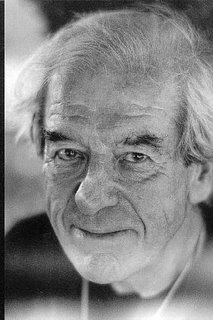
Miles of smiles...
Here's to a remarkable human. We are so lucky he's still with us. We can still laugh together, still share the experience of life together.
He and Peggie will soon travel around the horn on a cruise ship and up the coast of Brazil,
Thanks for your comments. All are welcome.
Friday, June 6, 2014
Sitting with Stanley on the shores of Lake Ontario
This beautiful June day I have the great pleasure of sitting with Stanley, in his house
on the shores of Lake Ontario...we're been going over his blog, re-reading things that he wrote years back and he's really delighted to see/hear his own work again. His profound concepts are expressed with resonant imagery.
We also looked at comments together. He's delighted to know that people still remember him.
Thank you for reading and commenting.
on the shores of Lake Ontario...we're been going over his blog, re-reading things that he wrote years back and he's really delighted to see/hear his own work again. His profound concepts are expressed with resonant imagery.
We also looked at comments together. He's delighted to know that people still remember him.
Thank you for reading and commenting.
Saturday, February 8, 2014
Happy Birthday Stanley Burke!
.jpeg)

Odysseus of The Mind!
We love YOU
Rock ON
Write ON
XOOX
Thanks for the Years of Inspiration!
xoox
XOOX
Tuesday, November 26, 2013
Friday, November 8, 2013
Stanley Burke Enjoying Life!

being sung at his grandson's wedding Summer 2013
He is sweeter than ever...
90 years young - and still one of the wittiest people I know.
Much Love,
Holly
Friday, July 19, 2013
Stanley Burke Right NOW
Guess who's in town and attending the Jazz Waves show @ The Silk Purse Saturday night?
Taking time off from working on the book, HIMSELF, accompanied by a flock of other Burkes and hangers on...will be all together in the music.
Holly Burke and the Naturals will be grooving by the sea @ 7:30 pm - west van
1570 Argyle - tickets 604 - 925-7292
NOT TO BE MISSED

Wednesday, March 23, 2011
Mr. Burke's Activities 2011
Thanks for your comments. I will respond here to the latest comment inquiring about Mr.Burke's activities. He's doing well, has recently turned 88 and is, of course, still busy writing! Your comments are most appreciated.
Monday, February 8, 2010
hello world!
Hi!
Stanley is on the west coast for the Olympics...
Still working on his concepts and looking great!
Happy Birthday Stanley Burke!
Stanley is on the west coast for the Olympics...
Still working on his concepts and looking great!
Happy Birthday Stanley Burke!
Friday, November 2, 2007
They're Changing Our Fishwater!
Marshall McLuhan used to say,"We don't know who discovered water but we can be sure it wasn't a fish."
What he meant was that fish are only vaguely aware of the environment in which they are immersed. And so it is for humans.
Despite millions of words about communication which have been written and spoken since McLuhan's time, we still haven't got the message.
When we get that message - we'll have a better, more peaceful world.
Bring in the outsiders!
Conventional thinking has to be opened up...
The talent we need to solve our problems and move forward comes from the fringes where fresh perception thrives.
Everything is changing. It needs to.
What he meant was that fish are only vaguely aware of the environment in which they are immersed. And so it is for humans.
Despite millions of words about communication which have been written and spoken since McLuhan's time, we still haven't got the message.
When we get that message - we'll have a better, more peaceful world.
Bring in the outsiders!
Conventional thinking has to be opened up...
The talent we need to solve our problems and move forward comes from the fringes where fresh perception thrives.
Everything is changing. It needs to.
Wednesday, July 25, 2007
The Thunder Burke Meets Himself

Here I was 'cartooned' during my CBC phase. 'Burke in a gilded cage,' hells bells - it was worse than that. But I escaped the cage to bring you other news...
Now, I'd like to talk to you about a powerful communication symbol - the Thunderbird- one of our greatest communication symbols. Originally he may have been an owl. But he evolved into an eagle with a human body, migrating with the Asian tribes who came to North America. Here he assumed the familiar form made famous by the west coast totem poles.
The Thunderbird also migrated westward to become the eagle of Rome, Germany, Mexico and the United States, among others. Look at an American coin and you'll see the lightning in his claws. He's a Thunderbird.
So - the Caucasians finally reached the west coast of North America - ending the great westward migration. Were they surprised to find their beloved Thunderbird symbol already established by the Native People? Something of profound importance had happened--the era of human expansion over the surface of the earth was over. The Thunderbird met himself. Exploration of one dimension was ended and now - the human race goes into new dimensions---outer and inner space.
Outer space is essentially physical but inner space is an exploration of the spirit and the essence of life itself.
Where do we go? Into space and into ourselves!
These are the last frontiers.
Thanks for visiting - I look forward to your comments.
Wednesday, July 11, 2007
New Age of Discovery
 Humankind now enters a 'New Oceanic Age.'
Like the great navigators of the Elizabethan Age, we sail into unknown waters...into the Ocean of Space, the Ocean of Electricity, the Ocean of the Mind. Previously we were land-locked and arrogant, confident that all would be revealed through logic. Now, humbly, but with far more power, we venture into other dimensions knowing there is no end to the voyage. Mysteries will always remain. Now we are told there is no Ultimate Truth. We will probably never understand even the basics of physics. How atomic particles can move forward and backward in time. How parallel lines can meet.
It is a strange anomaly that these mysteries emerge at a time when human knowledge is exploding. Perhaps it's fitting that we voyage into the Unknown just as the early explorers did. After all, ignorance is a pre-requisite for learning. As one quester put it," my ignorance is my expertise." So, in ignorance we blast off into ultimate mystery. The human community bursting outward, into the mysteries of space and science, the arts and global business.
It's a kind of daring unknown since the days of Drake, Hawkins, Shakespeare and Newton who were all contemporaries. So, " All hands on deck, we're heading to sea! Look alive there!"
It's a New Age of Discovery.
Monday, June 18, 2007
Breakthrough and the Great Pattern
Today's crisis comes into better focus if we recognize that it is remarkably like four which occurred in the past. A solution then seems to emerge.
It all began some two million years ago when our ancestors in Africa were driven from the forest by global warming. These small creatures, only four feet tall, were vulnerable and it seems likely they developed 'shout communication' to warn one another and to alert others when new sources of food were found.
The next great advance was made when Cro-Magnons developed true speech. The previously dominant Neanderthals had vocal chords but there is no evidence they used them for speech.Writing then became the driving force leading to the evolution of towns, cities, and empires such as those of Egypt and Persia.
The next great advance occurred when Greeks and Jews developed alphabets creating a new way of thinking. The printing press then spread this way of thinking across Europe leading to the evolution of today's western nations and to democracy, mass education, and all the essentials of western society.
Now, in the Electronic Age, we make the greatest, fastest, and most dangerous advance of all. In particular, we see the essential features of 'printing press' society thrown into crisis. \
Nations and democracy are in transition. Meanwhile, new forms seem to be evolving in China and elsewhere in Asia, India, and perhaps Islam. A new age, and new thinking, are clearly evolving in the electronic age which is transforming the world but English-speaking peoples retain nations, politics, and thinking essentially unchanged in 300 years.
Will English-Speakers Survive? The danger faced by English-speaking nations comes into sharper focus when you realize that no leading nation made the transition from one communications system to the next. Can English-speaking nations be the first? Can Americans change the very essence of the governmental system they have been taught to believe is almost sacred?
Canadians are in a better position as we make changes to accommodate French-speaking Quebec and grant greater powers to provinces and native peoples.The economy has declined, however, and the education system in many respects is static. And of course, looming above it all is the grim realization that, if the US goes down, Canada's fate is dark.
It all began some two million years ago when our ancestors in Africa were driven from the forest by global warming. These small creatures, only four feet tall, were vulnerable and it seems likely they developed 'shout communication' to warn one another and to alert others when new sources of food were found.
The next great advance was made when Cro-Magnons developed true speech. The previously dominant Neanderthals had vocal chords but there is no evidence they used them for speech.Writing then became the driving force leading to the evolution of towns, cities, and empires such as those of Egypt and Persia.
The next great advance occurred when Greeks and Jews developed alphabets creating a new way of thinking. The printing press then spread this way of thinking across Europe leading to the evolution of today's western nations and to democracy, mass education, and all the essentials of western society.
Now, in the Electronic Age, we make the greatest, fastest, and most dangerous advance of all. In particular, we see the essential features of 'printing press' society thrown into crisis. \
Nations and democracy are in transition. Meanwhile, new forms seem to be evolving in China and elsewhere in Asia, India, and perhaps Islam. A new age, and new thinking, are clearly evolving in the electronic age which is transforming the world but English-speaking peoples retain nations, politics, and thinking essentially unchanged in 300 years.
Will English-Speakers Survive? The danger faced by English-speaking nations comes into sharper focus when you realize that no leading nation made the transition from one communications system to the next. Can English-speaking nations be the first? Can Americans change the very essence of the governmental system they have been taught to believe is almost sacred?
Canadians are in a better position as we make changes to accommodate French-speaking Quebec and grant greater powers to provinces and native peoples.The economy has declined, however, and the education system in many respects is static. And of course, looming above it all is the grim realization that, if the US goes down, Canada's fate is dark.
More About a North American Community

OK, the lets think about how it might be structured.
Would there be a continental administration, a constitution, big buildings, and the trappings of sovereignty?
No! The new system would be based on electronic communication and which favors de-centralization so it would seem simpler, cheaper, and more effective to have it based on regional councils. These might be made up of delegates from existing state and provincial legislatures, who would, in turn, send delegates to a central body.
Would there be a continental administration, a constitution, big buildings, and the trappings of sovereignty?
No! The new system would be based on electronic communication and which favors de-centralization so it would seem simpler, cheaper, and more effective to have it based on regional councils. These might be made up of delegates from existing state and provincial legislatures, who would, in turn, send delegates to a central body.
I suggest that the central body, for historic reasons, might be called the Continental Congress. Some Canadians might object to that name as too ‘American’ but it would be appropriate.
The Continental Congress could be a ‘moveable Feast,’ traveling the continent rather than being established in one place inside a gigantic building with a huge staff. By meeting in various centers, like the original Congress of the United States and the first Parliament of Canada, the delegates would come to know the continent and dialogue with its people. By keeping numbers small, they would be able to use existing facilities in national, state and provincial capitals.
When not in session, electronic communication would permit them to keep in touch and attend day-today work.
National legislators, bureaucrats, and media people, of course, will fear loss of power and I can see negative stories coming out of Washington and Ottawa. Regional counterparts, however, will see a whole new chariot ride.
The Continental Congress could be a ‘moveable Feast,’ traveling the continent rather than being established in one place inside a gigantic building with a huge staff. By meeting in various centers, like the original Congress of the United States and the first Parliament of Canada, the delegates would come to know the continent and dialogue with its people. By keeping numbers small, they would be able to use existing facilities in national, state and provincial capitals.
When not in session, electronic communication would permit them to keep in touch and attend day-today work.
National legislators, bureaucrats, and media people, of course, will fear loss of power and I can see negative stories coming out of Washington and Ottawa. Regional counterparts, however, will see a whole new chariot ride.
Envisioning a New North American Community

CBC Public Environmental Forum, Toronto
Photo Eric Christensen/Globe and Mail
North American Community—what would it Feel Like?
I don’t think anyone can imagine a new North American community any more than people in the late Middle Ages could have imagined the Renaissance, or George Washington could have imagined modern America.
However it’s an intriguing subject, so let’s play with it.
First, I think we should begin with ‘feel’ because essentially, we’re dealing with emotions. I add that we are already dealing with deep emotions as the existing political systems are eroded, especially among print-oriented intellectuals.
People wish to be reassured that the existing system will continue but fundamental change is taking place. For example, the regionalization of North America is increasingly a fact; as Joel Garreau brings out in the “Nine Nations of North America”. It seems clear this trend will continue as increasing numbers of people are thinking regionally, especially outside the traditional power centers. Many of these new thinkers are now part of the mainstream. They are not simply responding to traditional resentment of eastern power. Rather, they see things in new, regional ways because they are increasingly aware of their own ‘regional nation.’
So let’s assume that this idea will come to feel right and be accepted; the way the people of Britain are coming to accept the European Union. What then? What will the thing look like? We can predict that separate nations will continue to exist but that people will develop multiple loyalties. They will first feel themselves to be citizens of the planet. Earth Day, has become a major celebration. Secondly, they will consider themselves citizens of the continent. They will also be citizens of their 'regional nations’, while still being national citizens.
This may seem fuzzy but we might remember that it seemed fuzzy in 1776 too and they made it work. Citizens of the 13 colonies were divided and uncertain but, in the end, they took on American citizenship without betraying local loyalties. I suggest it can be done again. Furthermore, fuzziness is characteristic of the electronic age.
So let's continue...
Cooperation will increase between regional legislators and bureaucrats in the US, Canada, and Mexico with video conferencing as a key instrument bringing them together. Regional cabinets will gradually form—in the same casual way that George Washington’s cabinet came together. There will be greater efficiency, and more democratic participation, in a host of areas where regional cooperation is already active—electric power exchange, pollution control, transportation, Great Lakes waters, manufacturing, immigration, agriculture and fisheries.
You may say these things are already happening and it isn’t necessary to create a new level of government. My response is that we must form a community:
First, we must do it to solve our environmental issues which have now become survival issues. Continent-wide cooperation is essential to solve these problems. Canadians have long been frustrated over what they see as foot-dragging in Washington over environmental issues, in particular, and we need political clout south of the border. Americans have made counter-charges. Better these charges are made face-face in a political forum where action can be taken.
Secondly, we would feel better about ourselves. We would sense that we have a mission, that we are doing something of importance.
Thirdly, government could be cheaper, more effective, and more humane because it would be closer to the people. It has proven impossible to scale down the enormous bureaucracies of Washington and Ottawa. The Canadian federal bureaucracy, relative to population, is even larger than the American. By putting government into a new electronic, streamed-down environment, it will become possible to phase out old structures.
The most important issue of all could center on Canadian fresh water resources which are the greatest in the world. Water is the source of life itself and, in a world which is warming, it could become more critical than oil. As the United States grows increasingly short of water, Americans are already looking to the north. Will they get the water they need?
Not necessarily.
Canadians are emotionally attached to waters in a way which is hard to understand for Americans whose personality has been shaped by ‘dry-land’ experience. The American mythology is based on covered wagons, cowboys, outlaws, Davie Crockett, Buffalo Bill, Custer, the Oregon Trail, Death Valley, Judge Roy Bean-‘The Law West of Pecos’, gold rushes, mining rushes, oil rushes, railroads, highways and automobiles. This is the stuff that makes legends and a nation. The Canadian personality, in contrast, has been influenced by water in a way that Americans have never experienced and this may explain the intangible but real difference between the two peoples.
The shaping of the Canadian personality goes back beyond Plymouth Rock, perhaps even before Columbus, to the time when European fisherman were attracted to the Grand Banks of Newfoundland, the richest fishery in the world. French adventurers then moved up the ST. Lawrence River while the British went into Hudson’s Bay. Both groups then followed the river systems of North America until they reached the Pacific, Arctic Ocean, and the Gulf of Mexico. These amazing ‘adventure capitalists’ set up fur trading empires covering the continent and used water as their communication system and almost their life-blood.
This spirit is still alive in Canadians who own more boats and spend more time on water than any other people. Its influence over several centuries has made Canadians’ softer’ than Americans. It doesn’t make them any less tough, just different. It also makes them environmentally conscious and it is no coincidence that Green Peace, for example, started in Canada. Canadians are passionately concerned about conservation and wise use of their water. They have already refused many proposals to ‘exploit’ it.
For the United States, this could mean problems and perhaps the worst strains along the border since the wars of 1812. American need for water will become even greater, despite all efforts at conservation, and the shortage could become desperate. Americans would then look to the north at neighbors literally ‘swimming in it’ and demand that it be shared. Canadians might respond that ecosystems should not be destroyed to put water on golf courses. This could lead to demands from dry land Americans that muscle be applied:” If they won’t share water, why should we share jobs? Stop manufacturing cars in Canada!”
An angry debate could easily develop. This is one more reason why: a North American community is needed and inevitable.
Subscribe to:
Posts (Atom)